
The Last Korrasami Analysis Anyone is Ever Going to Need
By: Mel
Most expressions of homosexuality in most of movies are indirect. And what’s interesting about that is of course that is what it was like to express homosexuality in life, that we could only express ourselves indirectly, just as people on the screen could only express themselves indirectly. And the sense in which the characters are in the closet, the movie is in the closet and we are in the closet. — Richard Dyer
Sometimes you live long enough to see yourself become a fandom elder. Podcasting about ATLA in 2008, about LoK in 2012, and now in 2026 getting the band back together for 7H (have we officially come to a consensus on what the acronym of this will be?). Many of us at OVA have seen this universe from its burgeoning, watched it live on Nickelodeon in 2005 and beyond. I know what you’re thinking: “god, another f$@&ing Millennial.” But here’s the thing: we watched the show in its original context, during its original conditions. That gives us some insight when looking back and re-evaluating that younger fans just don’t have. It is what it is.
For example: Did you know at the time Legend of Korra’s finale was released gay marriage was illegal in 15 US states?
And I know what you’re thinking there. “Yeah, yeah, we KNOW. It still doesn’t mean the relationship was well developed.” The single biggest complaint about how Korra and Asami’s relationship was handled at the time and today was the apparent lack of build up, that the creators had to put out a blog post confirming the intention of the ending as romantic, that it was a last minute cater to a vocal minority of fans.
Today, those criticisms still get leveled by fans who are, on the whole, supportive of the relationship but let down by the seemingly invisibility of it and necessity to assume off-screen development. And you’re not wrong to want more out of your queer representation. But there are two things here: First, understanding the landscape in which the last two seasons of Korra were being produced. And second, understanding the rich history of queer stories in art. Korrasami is fascinating both as a time capsule for a groundbreaking moment in media history and as wonderful modern day example of queer coding. And I’m talking about the real queer coding. Not “that’s so (insert thing here) coded” that gets thrown around on the internet.
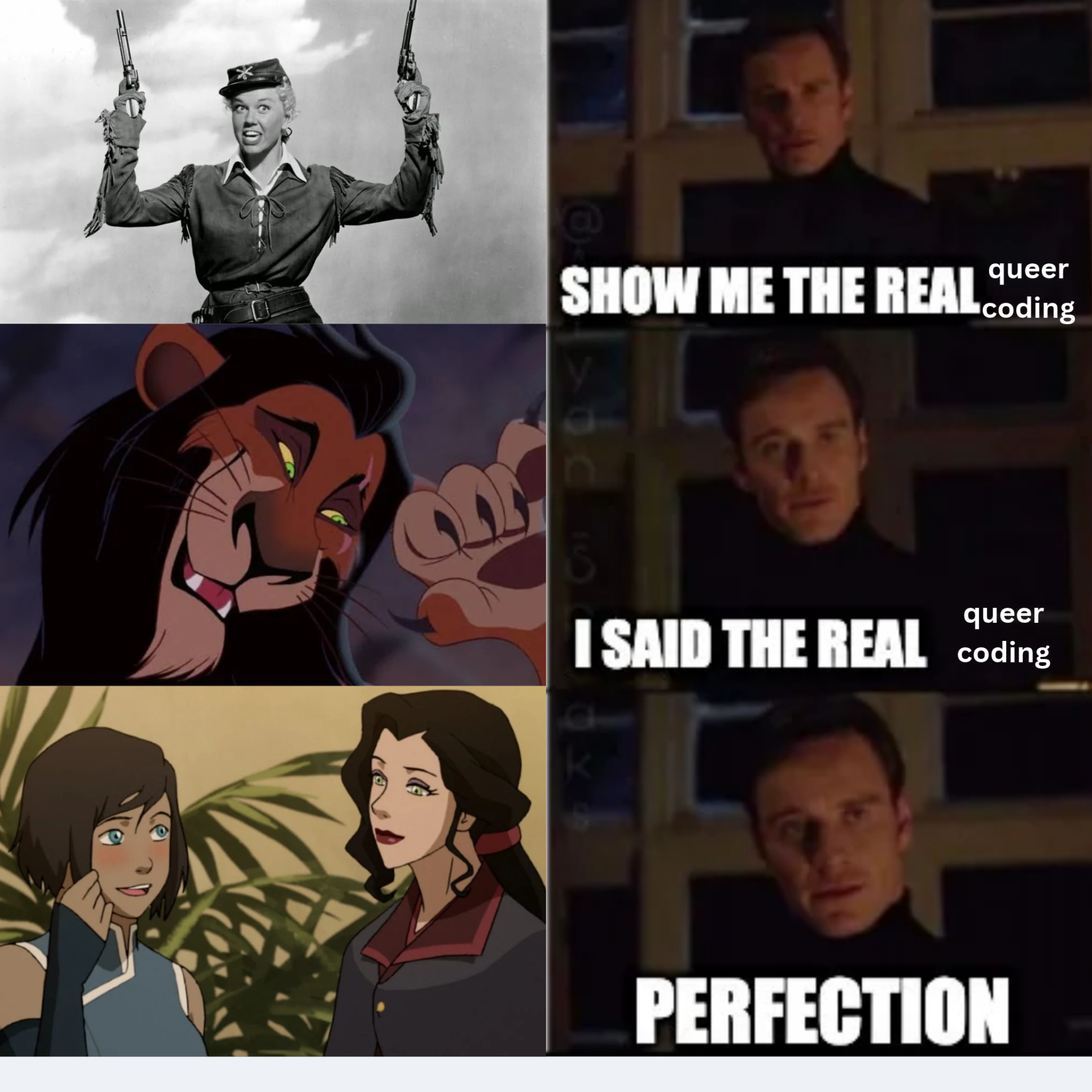
Jk these are actually all forms of queer coding but we’ll get into it.
So, you all claim to be media literate. That’s become its own buzzword. Someone doesn’t like something in the show you’re watching? They need to learn MeDIa LiTERacY. Seems like a cop-out a lot of the time (looking at you Nolan film bros). But where something like queer identity in media is concerned, something for which people were blacklisted and even imprisoned, media literacy is a non-negotiable requirement for properly talking about a piece of art. I know plenty of fans out there use the lack of development argument as cover for their real issues with the relationship. But I’m going to assume a good faith complaint for most people and dive in. Like deeply dive in. Like this is over 6000 words, diving in.
After 20 years in this fandom, from the days of updating episode entries on TVtome.com, that time I got banned from the AvatarSpirit.Net chat, going to DistantHorizons for their screencap library, DongBuFeng’s flashchat trivia nights, recording episodes of From the Spirit World at midnight after episodes aired, watching Comic Con panels through grainy audience footage, this is my magnum opus. If I gave you all nothing else since 2005 it will be making you understand queer. media. theory. Not just for the sake of Korrasami, but so when you look at a movie or TV show or video game and think you saw something a little gay, you will have the tools to know you absolutely did.
Welcome friends to the last Korrasami analysis you are ever going to need.
Part 1: Where it All Began

The Hays Code
This slang term you hear a lot about something being (insert thing here) coded is from a period of media history in the mid-century called the Hays Code. You might have heard of it (in fact you probably have heard of it). In the nascent days of the movies Hollywood developed a reputation for being morally questionable thanks to some genuinely unfortunate events that included a still unsolved murder and wild parties that ended with sexual assault and manslaughter charges. As a result of high-profile off-screen behavior and the fear of this new medium of expression, almost 40 states passed various censorship laws about what could be onscreen that at times overlapped or outright contradicted each other. A man–who you are never going to believe is named Hays (William Hays Sr)–was tasked with setting the ground rules of Hollywood to comply with these various bans.
What he developed was a code self-censorship in the form of a long list of things that could not be portrayed on screen and things that, if portrayed, had to be done in a certain way. Ready for your first lesson on reading between the lines under the Hays Code? Ironically, it never actually says word for word that homosexuality can’t appear on screen. It’s sort of fitting that in the code that forbade its existence, homosexuality had to be drawn from analysis. Specifically, Section 2, number 4: “Sex perversion or any inference to it is forbidden” in conjunction with Section 1, number 1: “No picture shall be produced that will lower the moral standards of those who see it. Hence the sympathy of the audience should never be thrown to the side of crime, wrongdoing, evil or sin.”
Literally homosexuality was coded in the code itself.
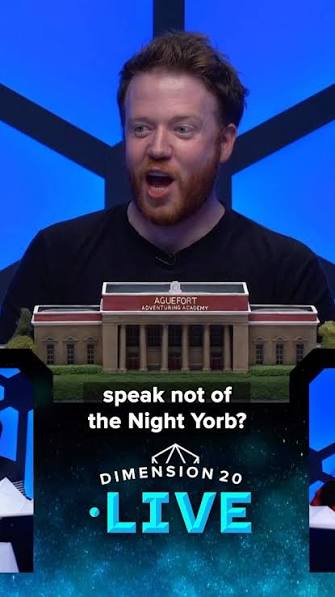
Speak not of the homosexuality.
But the Hays Code was, for many years, a strong suggestion. By 1934 the Motion Picture Association (it was called something different at the time but it’s the same group) formally adopted the code. It goes into effect July of that year and stays in effect until 1968. You know what else happened to be at that time? Just a little something we call the Golden Age of Hollywood. Some of the most important films you’ve heard a film studies professor talk about come from this time period: Citizen Kane, Ben-Hur, Casablanca, Sunset Boulevard, Gone with the Wind, Rebel Without a Cause, Breakfast at Tiffany’s, 12 Angry Men, Singing in the Rain, The Wizard of Oz, and approximately one billion more. Our most impactful movies of all time are produced under the Hays Code. Have you ever wondered why people in old timey movies kiss the weird way they do? Hays Code! Men and women were only allowed to kiss for 3 seconds. It’s why you get them doing weird neck stuff. For those who have seen Casablanca, you know that famous scene at the end where Rick and Ilsa don’t end up together and he tells her “Here’s looking at you kid”? HAYS CODE! Because their love affair was adulterous, it wasn’t allowed to end happily.
But, creatives aren’t going to go down that easy.
“If we wanted to get something across that was censorable… we had to do it deviously. We had to be clever. And it usually turned out to be much better than if we had done it straight.” — Edward Dymtryk
Keep that quote in mind. It’s very, very important.
How Did We Code Something?
At its core, to create something queer (or anything subject to censorship) during the 30 influential years of the Hays Code meant to find ways to say what you want by using other methods. And the ways to do this were almost limitless. Literally Alfred Hitchcock would have his characters kiss for three seconds, separate, and start kissing again to get a 2 minute makeout scene through censorship. Preston Sturges would use inanimate objects to suggest sex that couldn’t be shown on screen (like a train going through a railway tunnel). That same filmmaker is also responsible for the incredibly common “fade to black to imply sex” transition out of a scene. An entire subgenre dubbed “comedy of remarriage” got around the no adultery rule by using divorced couples in love triangles (see: The Philadelphia Story).
We’re talking directors, writers, costume designers, production designers, choreographers, set designers. Getting past the code was at so many different levels of the finished product which means that so many artistic choices are fair game for analysis. Telling queer stories, was no different.
Starting on easy mode: queer villains.
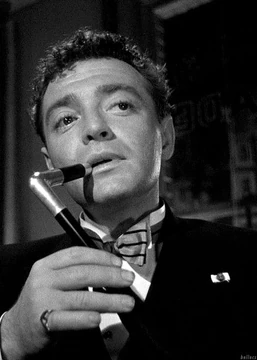
This man is Joel Cairo (Otto Matieson) from The Maltese Falcon and was the original effeminate, eccentric (read: GAY) villain. You like Jafar? Scar? Ursula? Thank this guy. One of the easiest ways to get a queer character on screen was to make a villain a gay stereotype.
The second level: bury your gays.
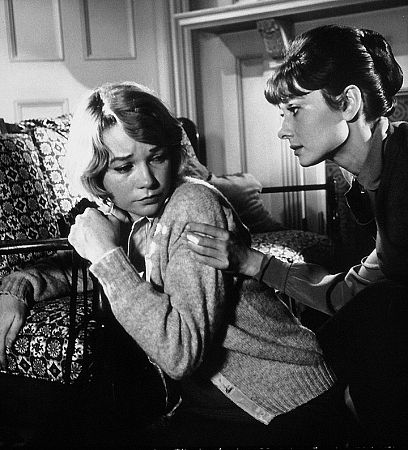
This is a shot from an absolutely gut-wrenching scene in The Children’s Hour where Martha (Shirley MacLaine) admits in no uncertain terms that she is in love with her best friend Karen (Audrey Hepburn, if that needed explaining). She dies by suicide at the end of the movie. If you’re going to be openly gay in a movie, you better get off the screen in a tragic, moralizing way.
Now for harder mode…
Let’s look at Ben-Hur (the one from 1959), a movie people may or may have not seen these days but you have probably at least heard of. At its time, it was the second-highest grossing film ever. Its record 11 Academy Awards has never been broken (though it has since been tied). It has been preserved in the Library of Congress. It is no stranger to best-films-of-all-time lists including those from Empire magazine, the American Film Institute, and the Director’s Guild of America. Even the Vatican has given it awards. Would you also believe it is gay as all hell? No seriously.
The movie follows Judah Ben-Hur. Of course the best choice for a first century Jew living in Palestine is Illinois-born Charlton Heston but that’s the 50s for you. He reunites with his childhood best friend Messala (once again the best choice for native-born Roman in 30 CE is the Northern Irish actor Stephen Boyd) who has been named a tribune in Judea, putting him at odds with Ben-Hur who is a native Jerusalemite and Jew under Roman occupation. It’s epic and long as all hell (it has an intermission, something I don’t think we’ve had in a non-gimmick form since Titanic in 1999). But one key element is the relationship between Ben-Hur and Messala. Screenwriter Gore Vidal wanted the conflict between the two to be that between scorned lovers who had become enemies. But that couldn’t go on the page. Instead, it went into the performance under the direction of William Wyler. Take a look on YouTube at the reunion scene between the two characters early in the film. Does it feel a little charged? Are the glances a little too lingering? Do they look like they might just kiss at any moment? That was intentional by Wyler.
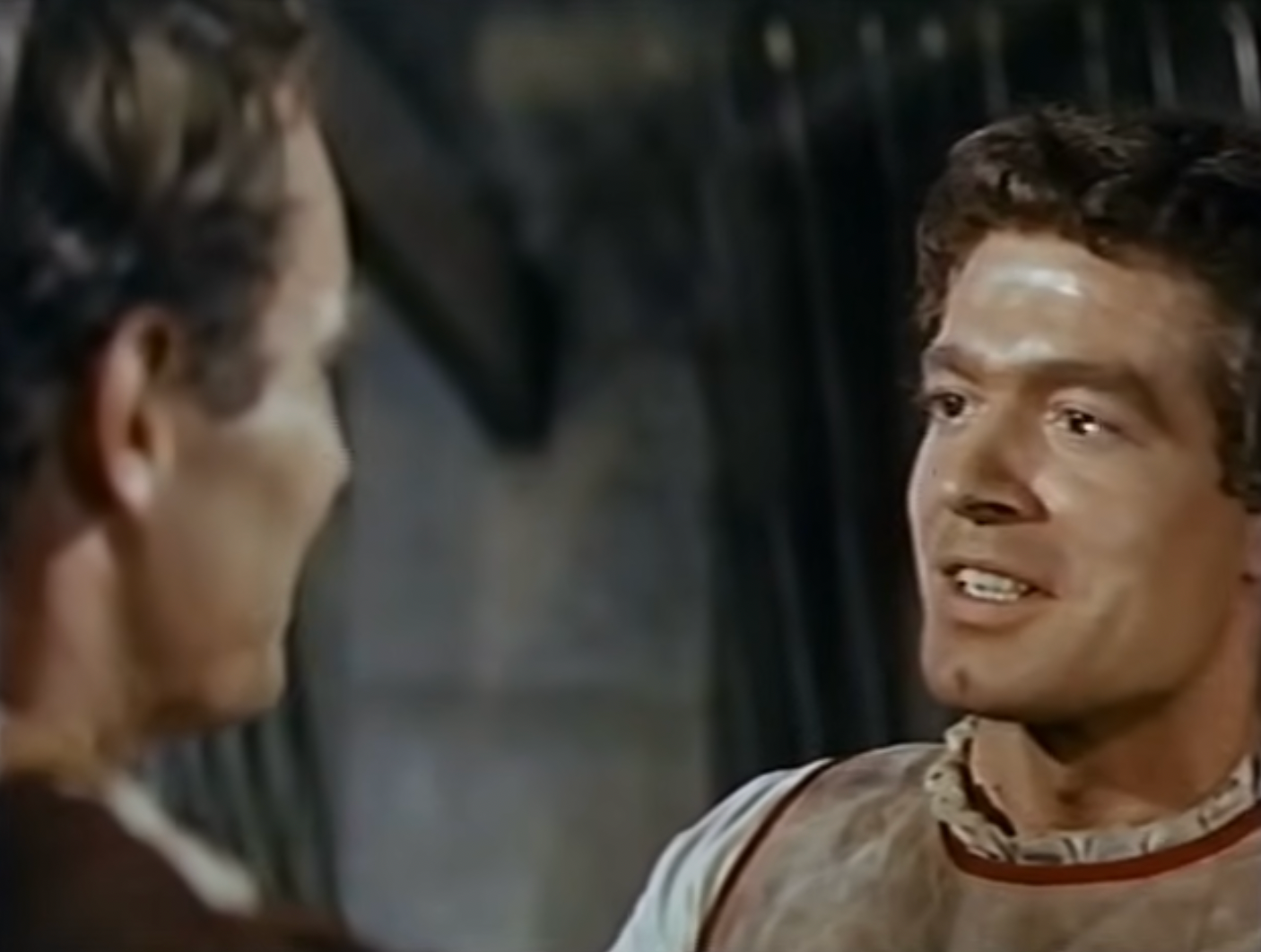
How I be looking at the homies
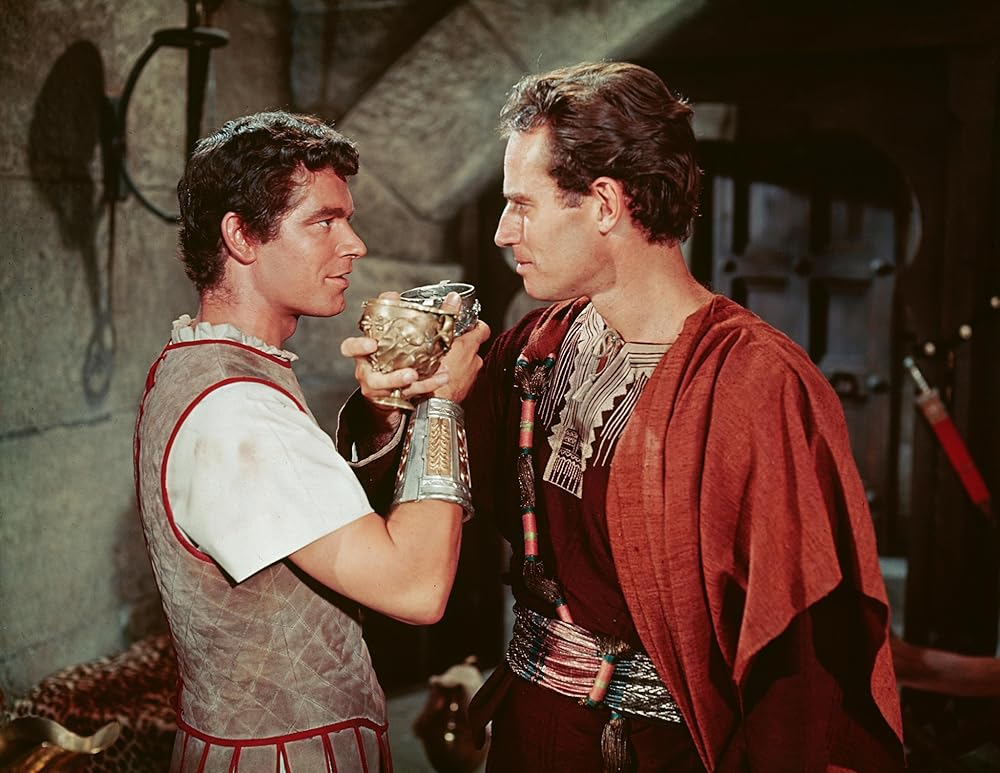
Fellas is it gay to? (yes it is)
Another famous example, though admittedly less famous (but few can match the shadow Ben-Hur casts) is 1960’s The Haunting and the character of Theo. The text never says Theo is a lesbian. But, like the meme: there were signs. Theo is not only unmarried but discusses a rather tumultuous falling out she’s had with her female roommate that led her to the events of the film. It does not take genius level media-literacy to recognize she is talking about a breakup. The more well-known version of the character today, Theo Crane from Mike Flannigan’s The Haunting of Hill House, was allowed to explicitly be a lesbian. Fifty-eight years later Theo finally gets justice.
Want an obscure example but one that goes balls to the walls? Night Tide (1961) by openly gay writer and director Curtis Harrington is, on its surface, a romantic horror film about a sailor on shore-leave who becomes enamored with a woman who claims their love can never be because she is dangerous siren who ends up killing her lovers. While, on its face, Johnny (Dennis Hopper) and Mora’s (Linda Lawson) story is about two young people falling in love despite terrifying circumstances, what it is very clearly about is queer identity and repression. Johnny is a young man who struggles with his own image. Early in the movie we see him in a photobooth striking different poses, struggling to get his cap to fit right between takes. It’s a clear metaphor for identity vs perception. In the film he has an attraction to something unorthodox (a mermaid) and dangerous (she has killed all her previous lovers). It’s not hard to see where that is going. On Mora’s side of the story, she spends much of the movie actively repressing and attempting to flee from her own condition. She’s ashamed of what she is and believes herself to be monstrous because of her nature. Ultimately the two are able to become free from their respective constraints and give in to the life they want to live. Harrington should be commended for managing to make a hetero love story into such a clear metaphor for queer existence.
The story on paper says one thing. The intentions behind the creatives say something else. Once you understand this way of looking at something, you’re going to start to see it everywhere.
Part 2: Korra and Asami
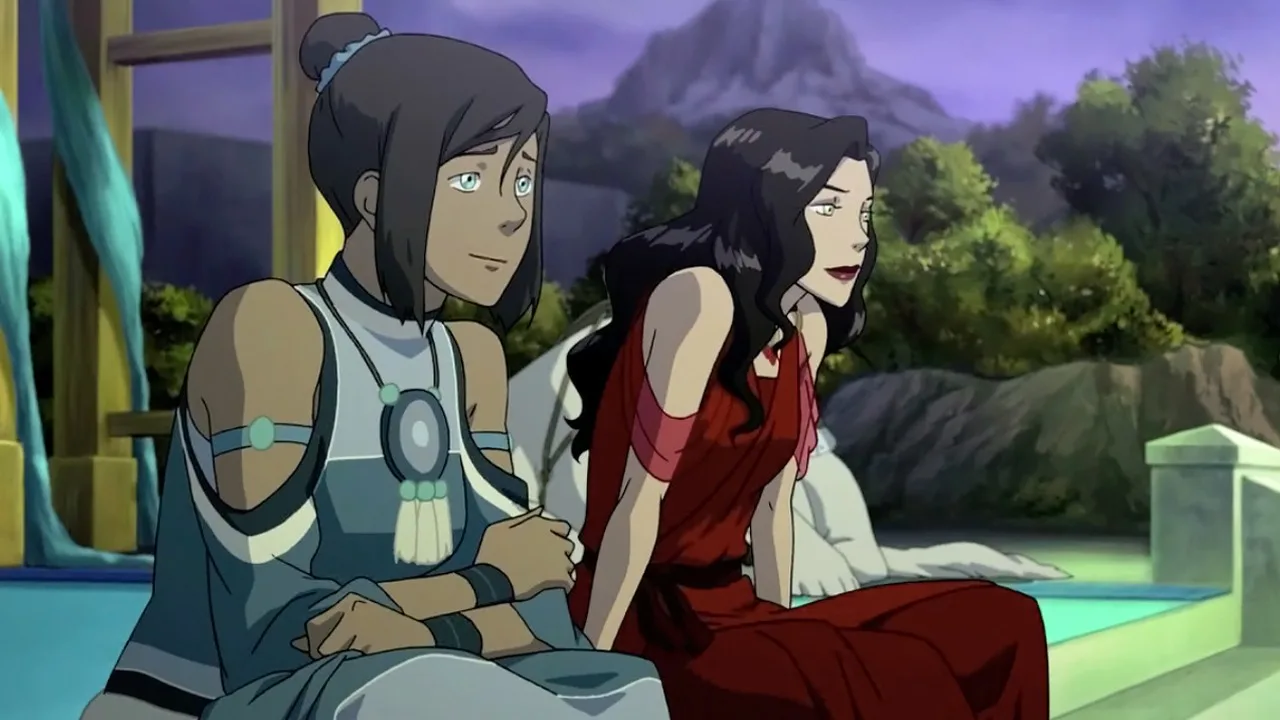
A Brief Oral History of Korrasami
Now, I’m going to nip something in the bud right now. For some reason people feel the need to completely disregard some of the oral history around the development of the show. I assume because Bryan Konietzko talking about how early he saw the potential in Korra and Asami as a romantic pairing doesn’t vibe with their view of the situation (Korrasami came out of nowhere so how could Bryan possibly have been thinking about it in 2011?). But, I’m in the practice of believing what people say.
After the end of season 2 where Korra’s relationship with Mako was ended, development began on fleshing out more and Korra and Asami’s relationship outside of their positions as opposite corners of a love triangle. It was during this time Bryan (who had early on considered the possibility of Korra and Asami but never pursued it believing it to be a nonstarter) considered a quote from Miyazaki that pushed back against the idea that a man and a woman together on screen meant they automatically were romantic interests. Konietzko considered the flipside: does two people of the same sex together on screen automatically mean they can’t be in a romantic relationship? It changed the way they started to look at the scenes and plotlines they were developing for Korra and Asami as they fleshed out the final two seasons, which were developed together and produced back-to-back. If these two characters had chemistry, could they explore that to its logical conclusion? The answer, at least as far as the surface script was concerned at the time, was no. Konietzko confirmed the studio knew what they wanted to do and weren’t going to stop them, but had hard limits on what could actually be shown. Remember: gay marriage won’t be legal nationwide until 6 months after the show was done airing.
To help clear up the timeline, based on Bryan’s post on the subject (found in the sources section of this) goes like this:
- Crew gets together to begin development on the final two seasons of Korra and identify Asami and Korra’s relationship as something worth expanding (“Once Mako and Korra were through, we focused on developing Korra and Asami’s relationship.”)
- As part of that writing process, they realized a natural path their story was taking was romantic (“The more Korra and Asami’s relationship progressed, the more the idea of a romance between them organically blossomed for us.”)
- The crew worked in ways to develop their relationship that would earnestly show the evolution from friendship to romance but could still fly under the radar (“We still operated under this notion, another ‘unwritten rule,’ that we would not be allowed to depict that in our show. So we alluded to it throughout the second half of the series, working in the idea that their trajectory could be heading towards a romance.”)
- While working on the finale, Mike and Bryan brought the intention of the plotline to Nickelodeon in an attempt to show the relationship explicitly. The studio insisted on plausible deniability in what ended up on screen (“But as we got close to finishing the finale, the thought struck me: How do I know we can’t openly depict that?…We approached the network and while they were supportive there was a limit to how far we could go with it.”)
- Ultimately, they end up with a scene that was as close to the line as the studio would allow them (“I staged a revision where they turned towards each other, clasping both hands in a reverential manner, in a direct reference to Varrick and Zhu Li’s nuptial pose from a few minutes prior. We asked Jeremy Zuckerman to make the music tender and romantic, and he fulfilled the assignment with a sublime score.”)
Luckily there is an entire rich history of people trying to get queer stories across on screen when the powers that be said no. The playbook for this had already been written over the decades. And this, my young friends, is why it is so, so important to know the ancient Jedi texts, the deep magic. The queer community has such a detailed history and while I won’t tell you for a dollar to name a woman, I do expect today’s upcoming queer young adults to know their history enough to not talk out of their asses. “tHeY shoULd hAVe deVeLOped IT moRE” You’re right, it had a right to be as plain and unambiguous as Korra’s romantic story with Mako. But then there’s literal reality.
So, rather than tearing something beautiful and historymaking, let’s celebrate it for what it was able to accomplish. Because while I will forever ache for what the studio denied us at the time, there is beauty in this landmark queer story slotting right in with the decades of history in queer media.
Queer Coded Korrasami: How the Crew Pulled Off the Story Within the Story
You claim to be media literate? You think you know how to read a gay story when it’s in front of your face? Let’s dive in then.
Korra and Asami’s budding relationship is actually flirtation
One of the first things we see in Book 3 of LoK is Asami taking Korra out to teach her how to drive (we can only hope they implemented some sort of driver’s license system at some point). The conversation is light and fun. Asami teases Korra over their past shared romantic interest in Mako. Korra learns an easy way to make Asami laugh is to make fun of him. Later in the season, we see Korra play a practical joke on Mako that is strictly for Asami’s benefit–she turns around to make sure Asami sees and smiles at her laughing as she lifts Mako up into the air without warning who yells that they did not rehearse this.
In Book 4 when Asami greets Korra before they go for lunch, she compliments her hair and Korra responds with the blush heard round the world (literally, that episode aired and every single tumblr account would have been posting the Leo meme if it existed then) and attempts (I say “attempts” because it comes of charmingly vulnerable) to throw a compliment back to her.
What these scenes are standing in for is flirting. Asami and Korra are flirting with each other. Don’t believe me? Then what the hell is this
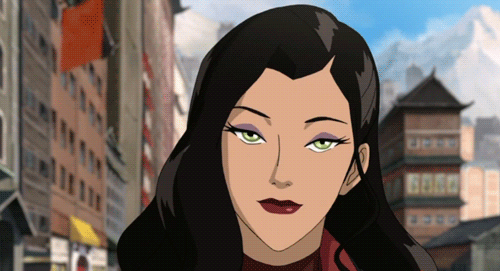
or this:
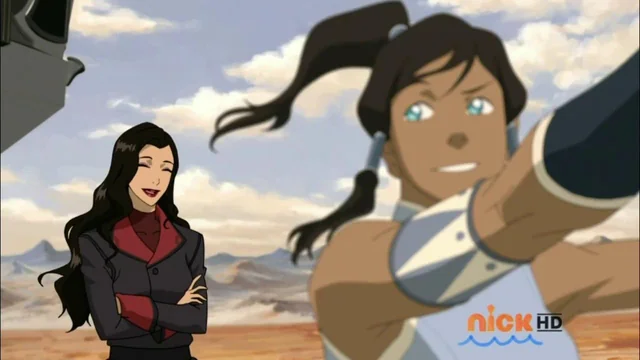
or this??
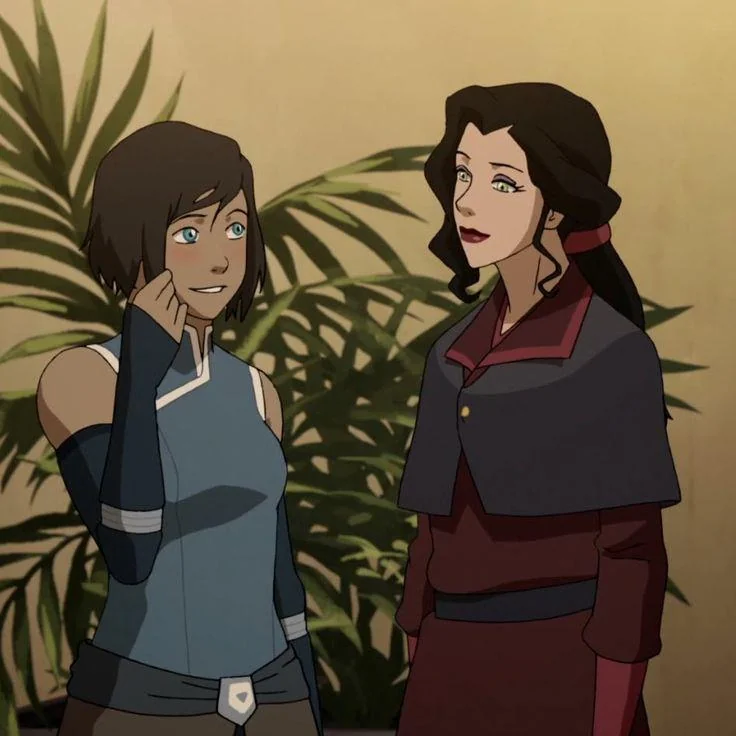
“They’re just good friends” please be so for real right now.
Remember our Ben-Hur example? The script didn’t explicitly say they were lovers, but it didn’t say they weren’t and the actors followed direction to play the scene in that specific way. It’s no different here with the design of facial expressions, putting blushing into a scene, voice acting choices. Very telling is the artists’ choice to make Korra blush not when she is receiving a compliment from Asami, but rather when she is trying to give Asami a compliment back. You can imagine plenty of people slotted into this scene, telling Korra her hair looks good, and her sheepishly accepting the compliment. It’s hard to imagine her nervously blushing while trying to tell Mako or Bolin that they look good (if she did, the immediate assumption would be romantic).
Asami becoming a support for Korra is emotional and domestic intimacy
One thing that caught my eye early was in Book 3 when Asami assumed the role of guardian of Korra’s body while she was in the spirit world. This is something we saw Katara, Aang’s future wife, do often in the original show. In that context, it was a sign of the deep trust and emotional connection between them. The act involves sitting there patiently for hours at a time and, in some cases, risking your life to defend the helpless Avatar. It was seen as such a deeply intimate act that fans would go on to headcanon that it was a job reserved for the Avatar’s love interests only. Not only is Asami the only character we see performing this function but she does it multiple times and even has to carry Korra’s unconscious body to safety at one point. When Asami fails at this, she has a defeated look on her face.
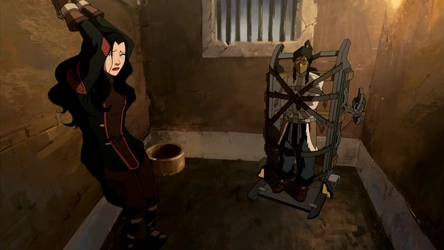
(I remember thinking at the time this aired you could tell exactly what Asami was thinking just by this expression alone)
Later, in a poignant scene at the end of Book 3, it is Asami who is helping a disabled Korra get dressed, who is pushing her wheelchair, and who is performing the duties of caretaker. The way the scene is staged is incredibly intimate, incredibly vulnerable for both parties.
A tight closeup of Asami gently holding a hairpin in her mouth and then placing it gently in Korra’s hair:

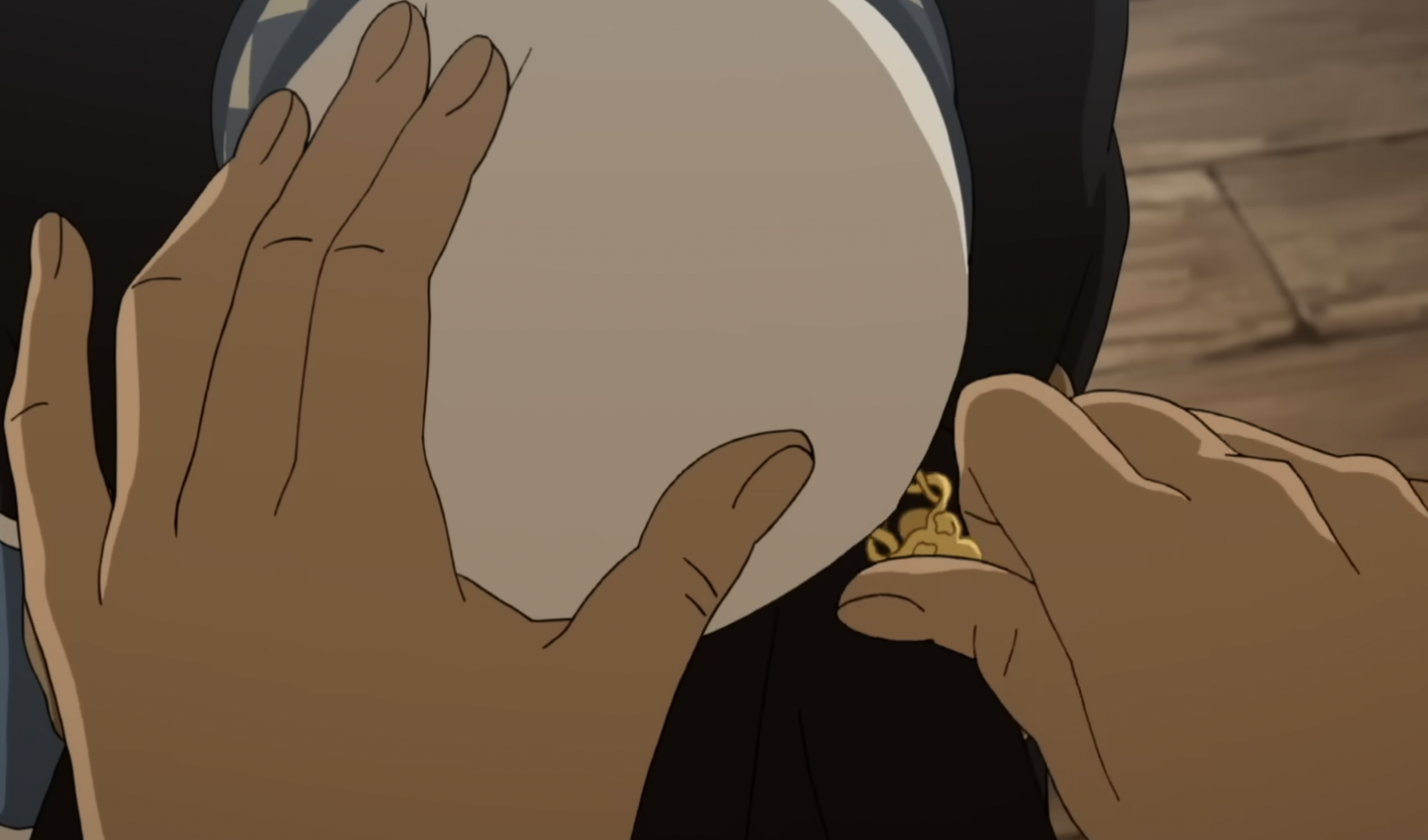
They are in physical contact throughout the scene:
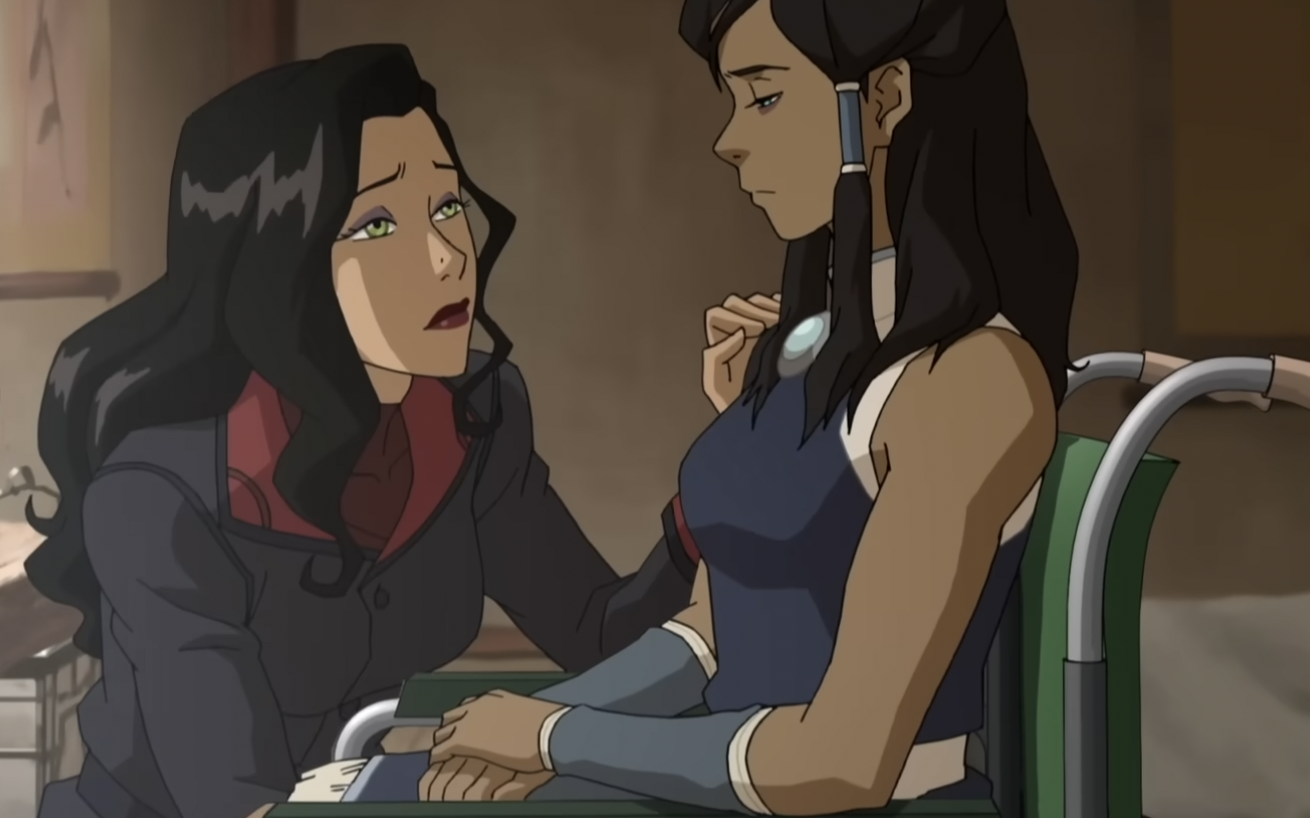
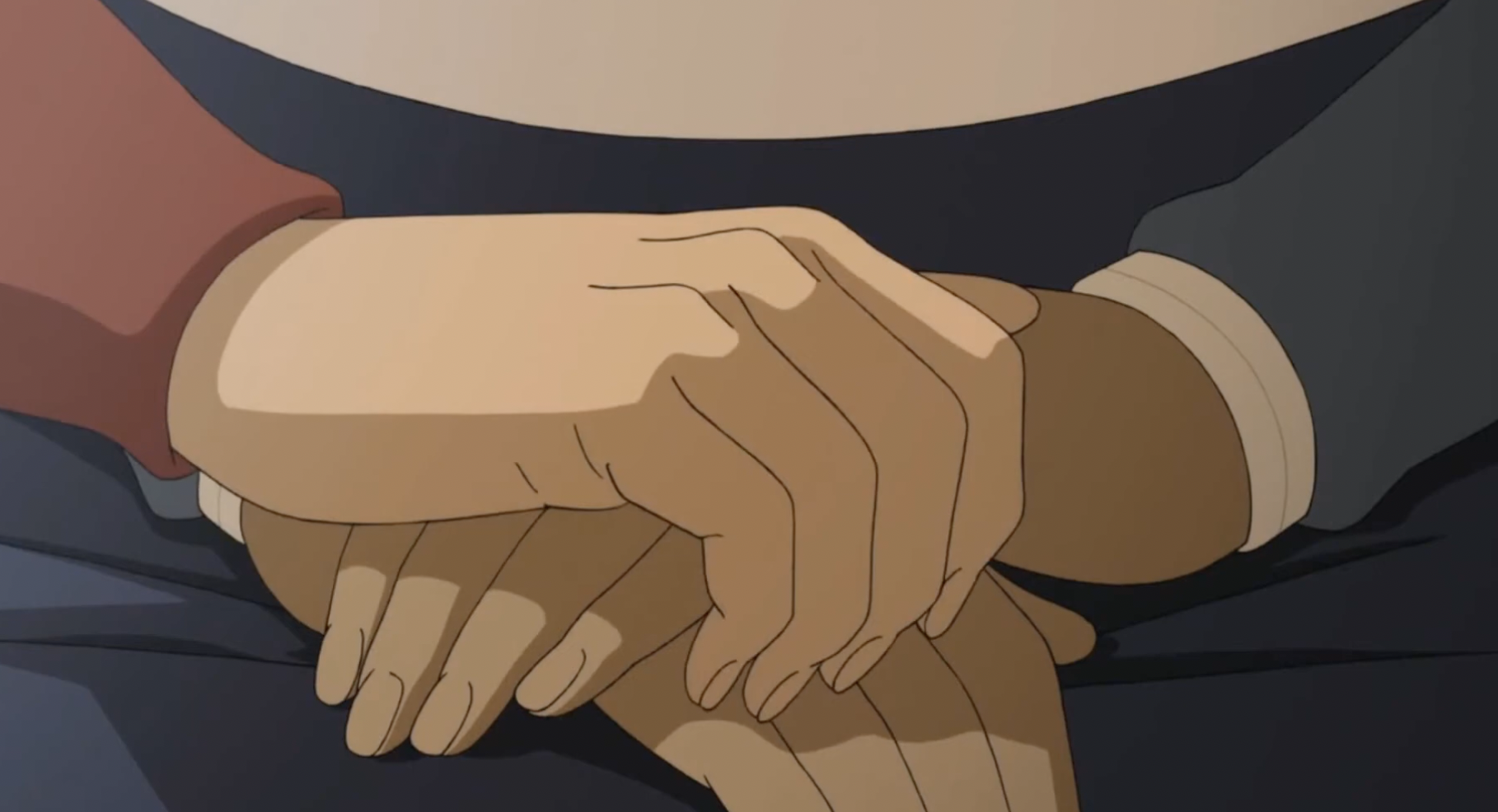
Later, we learn Asami offered to go with Korra to the South Pole to continue helping her during her recovery. This is not a light thing. Neither Mako or Bolin are in this position. And even when Korra’s parents are present it is Asami who is constantly at her side. In one of the more cited examples, we learn that during her time away Korra was receiving letters from all her friends regularly but only ever wrote back to Asami. She did this because she felt more comfortable talking to her about the difficulties she was going through than she did with anyone else, by her own admission. Sapphic romance has a long history of using the epistolary (correspondence) form. The poet for whom the word sapphic is named wrote in the form of love letters. Emily Dickinson famously wrote intensely emotional letters to her sister-in-law with whom she is believed to have some form of romantic relationship. Queen Christina of Sweden wrote dozens of preserved letters to a lady-in-waiting with whom she seemed to have an intense romantic relationship.
What we see in all this is that the show is using both its own plot (Korra’s injuries and mental and physical recovery) as well as its own internal language (Asami as the Avatar’s guardian) to tell us that the pair are deeply emotional and even domestically intimate with each other.
Asami’s behavior in season 4 is queer longing/yearning
This is the only time I’m going to reference the comics because the show’s content stands on its own. But, I think it’s worth noting that the Turf Wars series, written by Michael Dante DiMartino, makes explicit something that was suggested by Book 4. While discussing their burgeoning relationship, Asami talks about how deeply she was affected by Korra’s absence and how that reaction made her realize the nature of her own feelings for Korra which she considered revealing in a letter but was ultimately too afraid of rejection.
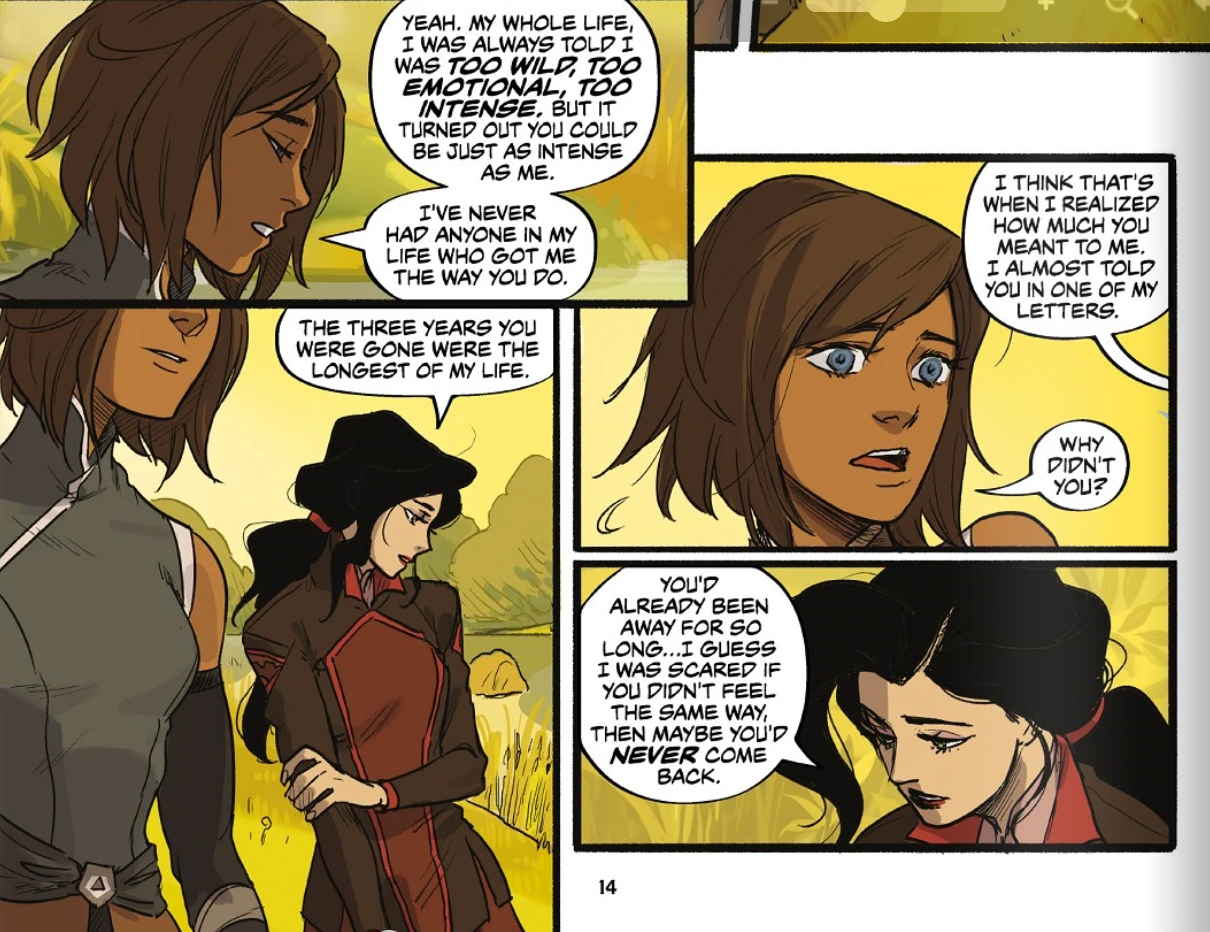
Friends, Romans, let me introduce you (or recap for those who already are familiar) to queer longing. Living a queer life in the context of the world we exist in has almost always guaranteed a period of loneliness. For a good portion of your life, being queer means keeping a secret. That breeds a lot of ruminating. A lot of contemplation. A lot of desire for something that will probably never actually belong to you. This is because our formative years are spent unable to act on our feelings because of societal constraints, personal safety, and/or the desire to maintain interpersonal relationships.
“Gay yearning meant that I was safe from a two-fold rejection. To want without doing, I was safe from rejection from a world that wasn’t going to accept or understand my desire, sure, but also safe from potential rejection from the person I was yearning for.” — Garrett Schlichte
And boy does Asami yearn.
In the first scene we see her in during Book 4 she’s catching up with Mako. In recapping their day-to-days they turn to matters of the immediate future. Korra is finally returning to Republic City after 3 years away. Asami wistfully turns to look in the middle distance saying “I can’t wait to see her.”
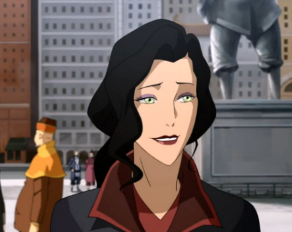
Add this to the board of things I’m surprised they got away with.
In the next episode, we see more into the 3 years Korra was away. She was receiving letters regularly from her friends. Mako was sending well-meaning tedious updates on Republic City, Bolin was sending attempts at humorous report outs on the happenings in Kuvira’s army. In Asami’s letter she tells Korra: “I miss you. It’s not the same in Republic City without you” before going on to ask Korra how she is feeling and then, eventually, getting to her own updates. Later on, we see how difficult Asami’s time in Republic City was. Korra’s absence (and 2 years of no contact) seems to have played a role in her decision to finally speak with her father again. We see her crying in a park named for Korra, yards away from a statue of her. When Korra returns, Asami, angry at Korra for the first time we’ve seen, lashes out at Korra for both her absence and her attempts to casually reintegrate herself in the lives of her friends.
In one scene that is not intentionally funny but certainly has become an event at which fans poke fun at Asami’s obvious ulterior motives is in the episode “Remembrances.” Korra is sitting outside deep in thought, Asami arrives with a cup of tea saying she was worried Korra might be cold. This is one of the few scenes that I actually think was on its face romantic. There’s not much subtext you need to add to the pair of them alone under the romantic colors of the sky, the act itself and Asami’s reasoning.
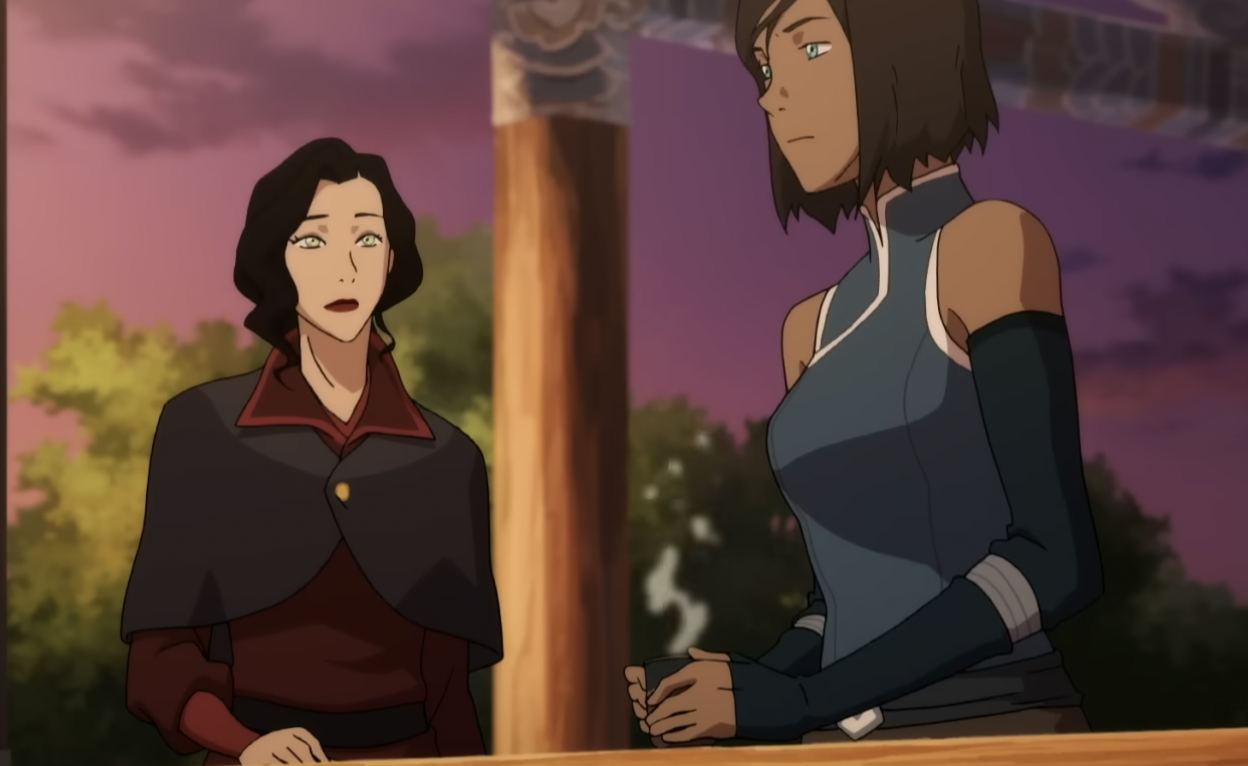
But, fans asked themselves: why is she worried that a woman who grew up in an arctic tundra might be cold on a mild evening? The answer is she’s not. It’s an excuse to see Korra. In the finale, we see this again when Asami finds Korra at the wedding and sends Tenzin away so they can be alone (it was confirmed in the creator’s commentary that Asami lied to get Tenzin to leave). It’s a pattern of seeking her out just to be near her.
This is as blatant queer yearning/longing that I’ve seen.
Odds and Ends
Just to put a bow on the above points, there’s a couple of individual scenes I want to call out as particularly noteworthy.
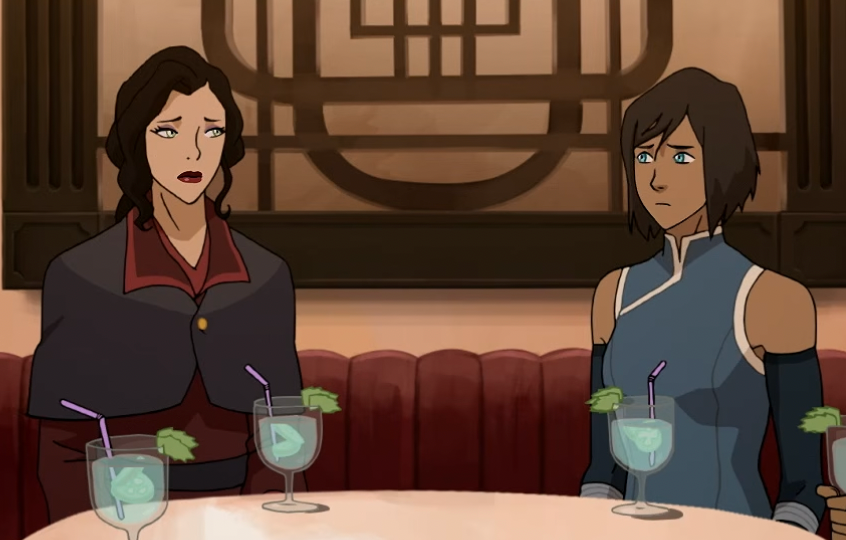
First, we’ve discussed the reunion scene in Book 4 at length already but it is an incredibly rich scene. Setting aside the hug and blush for a second and looking purely at the lunch scene itself, we get a very poignant moment where Asami lets something slip. She mentions Korra had confided in her that she had been unable to access the Avatar State. Mako questions how she knows this since Korra had been radio silent for three years and they turn to look guiltily at each other:
Mako then asks point blank “What is going on with you two?” and we get this tableau:
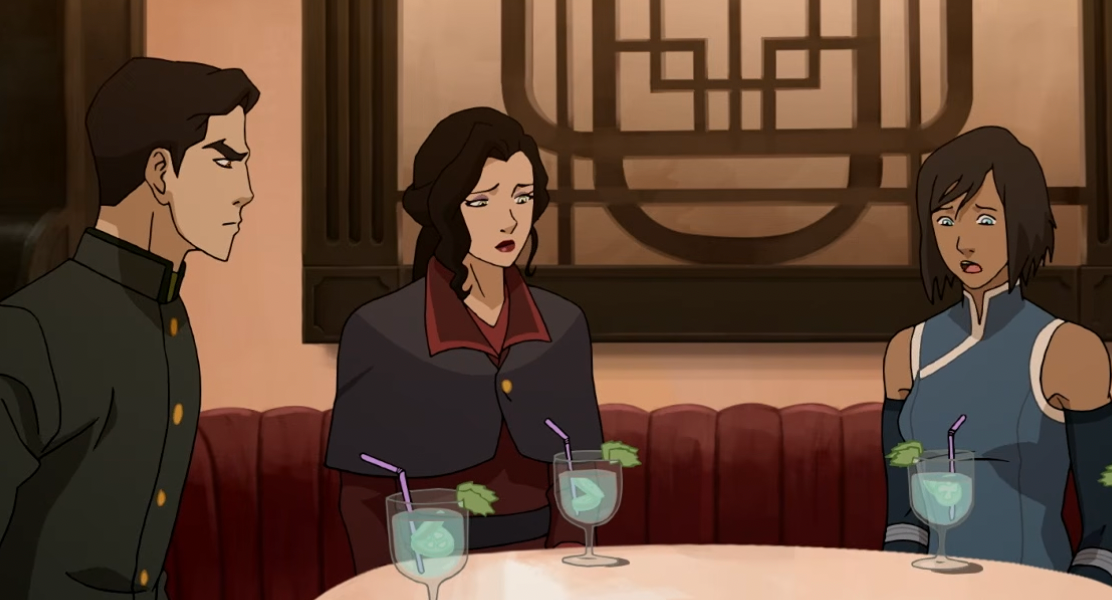
They are literally being outed as having a secret relationship in the context of the scene (having written each other letters in secret) and coded as being outed for having a secret romantic relationship. It’s another one of those exchanges that’s hard to view in any other context.
Later in that same scene, we see an argument between Asami and Korra. Well, it is less of an argument and more that Korra’s stomach dropped all the way to her ass when Asami got mad at her, venting pent up frustration with Korra’s absence and Korra’s perceived judgement at what Asami did during the time she was away.
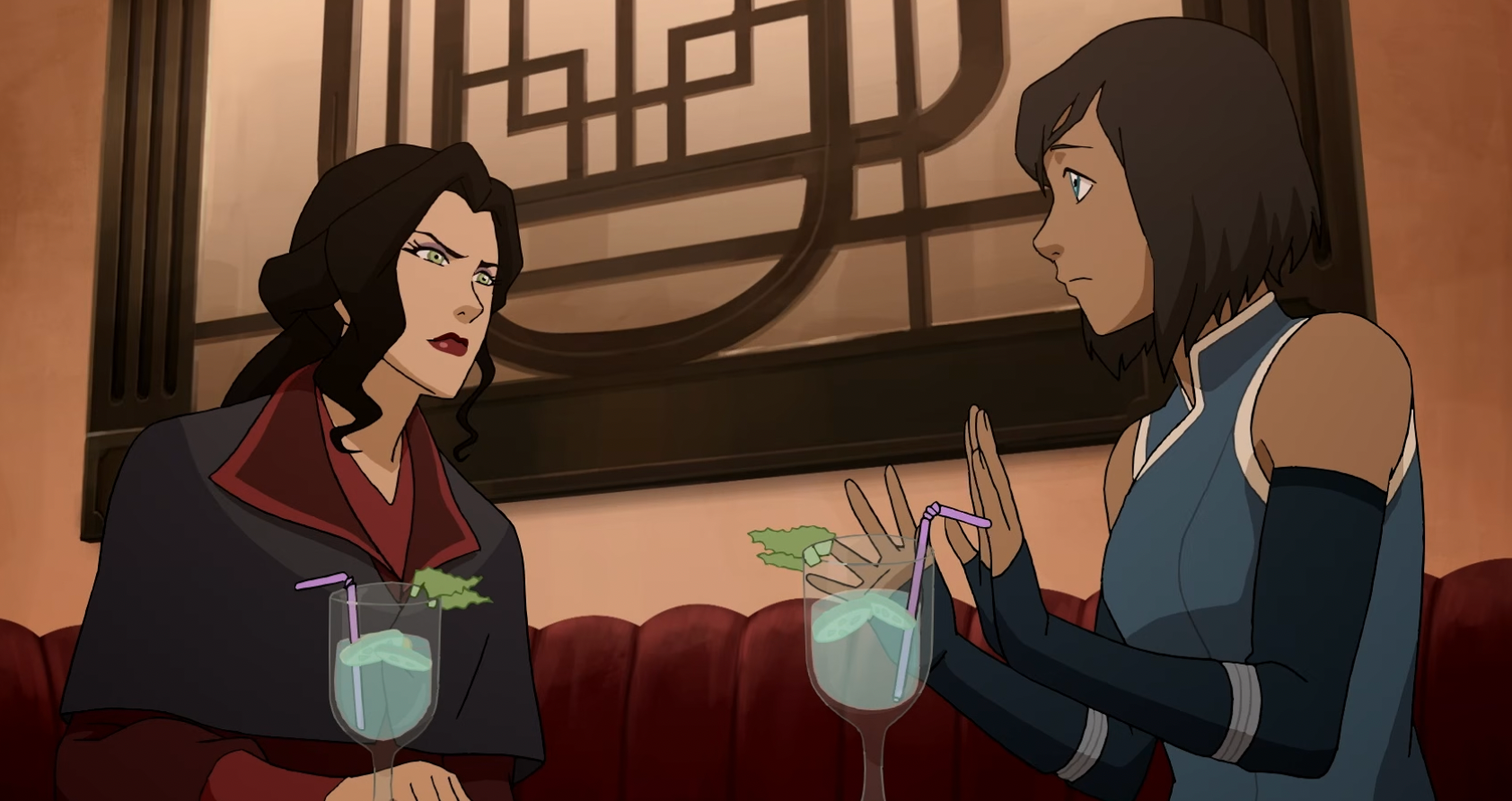
The scene has a follow-up in the finale where Korra apologizes to Asami and only Asami for being away as long as she was.
The second thing I want to draw your attention to is the staging of the final 3 minutes or so of the show. We get a sequence that is the “curtain call” for the show. We’re giving each of our main and supporting characters a moment to take a bow to the audience. We saw this in ATLA with Zuko’s coronation and then the pan around the Gaang and friends at Iroh’s teashop, slowly closing in on our main character (Aang) and the most important secondary character (Katara). LoK does the same starting with our most removed characters (Varrick and Zhu Li), getting closer with Bolin as he officiates and we pan across the wedding attendees and see a slew of familiar faces. Then Korra is given a moment with Mako to close the loop on their relationship history. Then Tenzin, Korra’s mentor and father figure, takes stock of who she has become since the beginning of her journey. And then one last person interrupts the conversation. Chat, I cannot begin to explain to you what it was like to experience this in real time but the reaction videos do some justice to the shock at Asami’s voice quietly cutting in on what we were sure would be the last scene of the show.
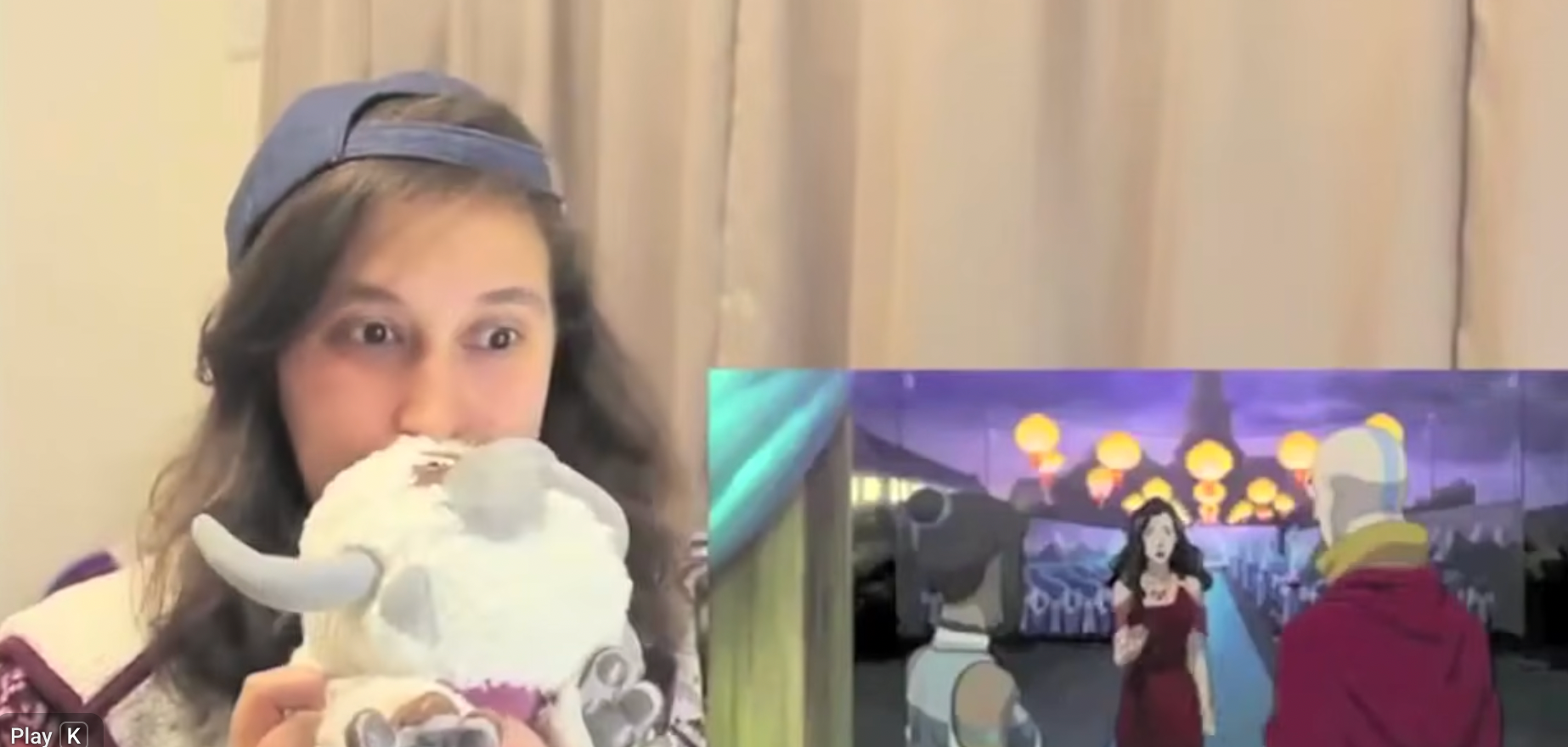
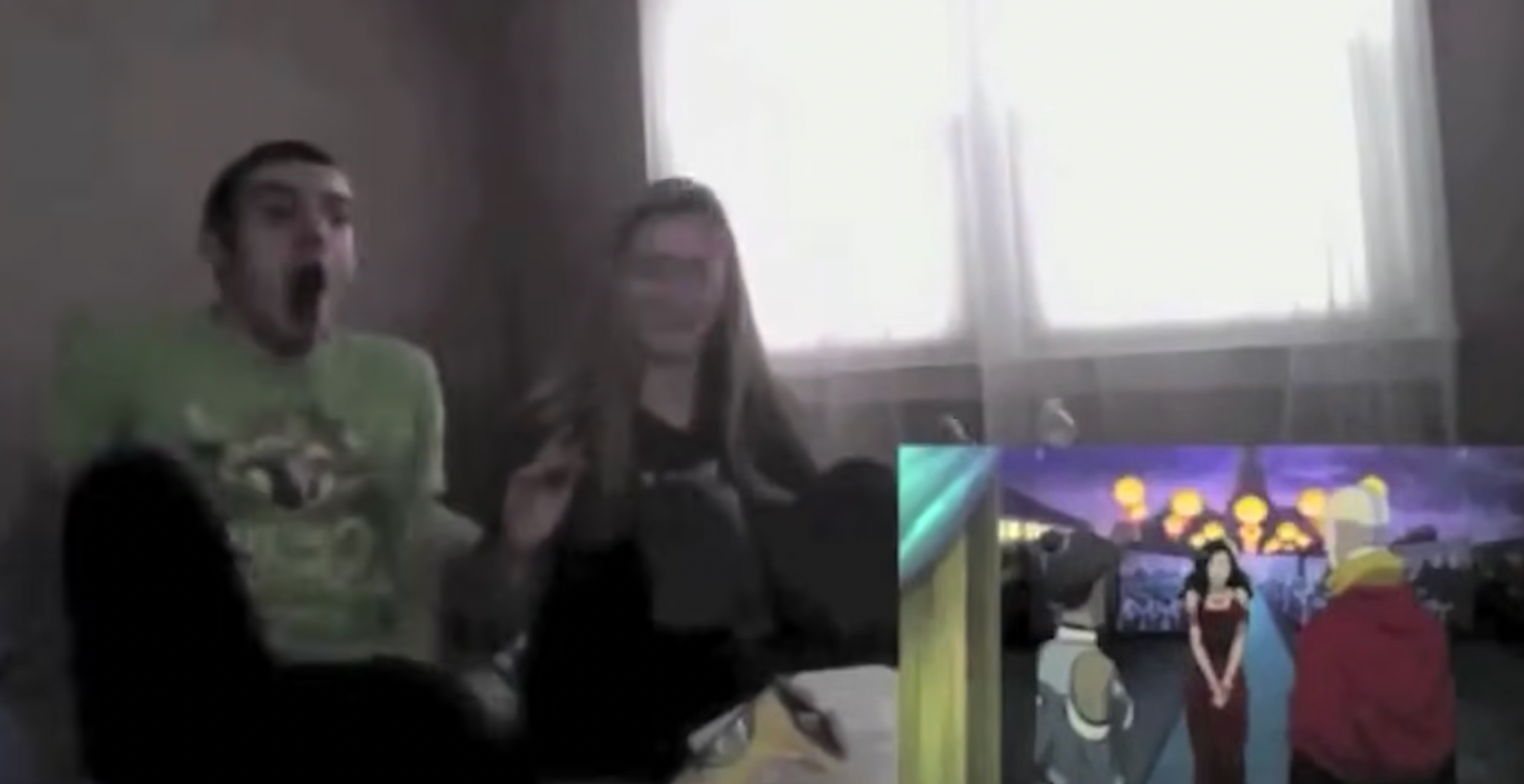
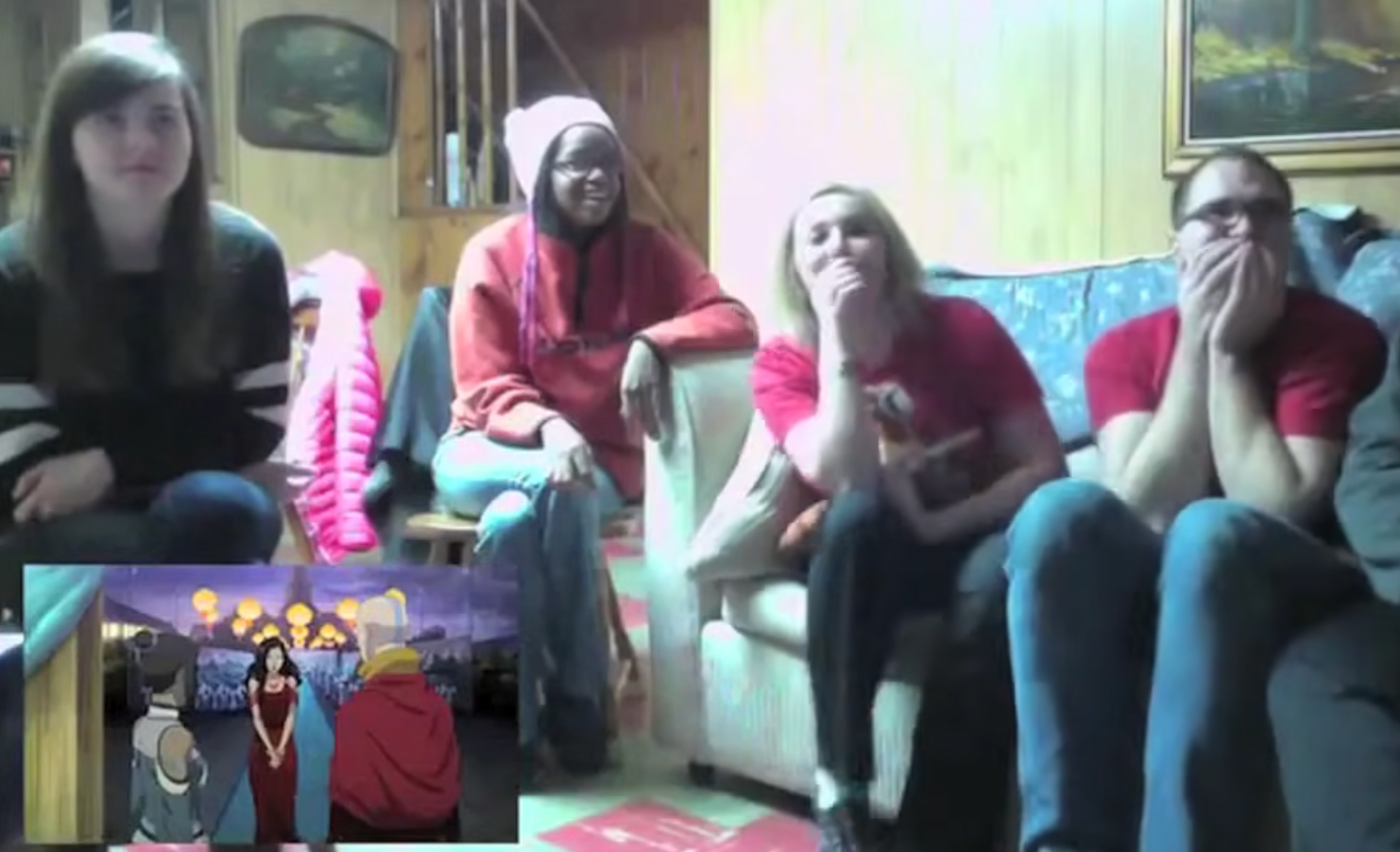
(Since I do not know the creators of these reaction videos, besides the obvious one, credit to this video for the screen shots)
You really had to be there. But I digress…
The final curtain call before we bring out the lead is Asami’s. And for the final 90 seconds of the show, it is only them on screen. She sits down with Korra who asks for forgiveness and offers condolences and Asami, forgiving her, reveals that Korra dying would have been on the same level for her as losing her father. Korra then asks Asami to run away with her on vacation.
There is a trope in longform storytelling that you close up an story with either a wedding or a funeral (either literally or metaphorically). For example, The Lord of the Rings closes on a funeral (Frodo leaving Middle-earth forever) while ATLA ends with a wedding (Aang and Katara getting together). In the case of Korra we are both literally ending with a wedding (Varrick and Zhu Li’s) and a metaphorical wedding (Korra and Asami getting together). Korra and Asami’s final pose was intentionally designed to mimic a couple at the altar. The music ask was for something “tender and romantic.” As much as Nickelodeon might have been happy with the plausible deniability of that ending, it’s fairly hard to plausibly deny when all is said and done.
Part 3: The Double Standards
Where Do We Draw the Line?
“If it seems out of the blue to you, I think a second viewing of the last two seasons would show that perhaps you were looking at it only through a hetero lens.”
That quote from Bryan did and still does piss a lot of people off. It was taken both as a call out that if people did not support the creative decision then they were homophobic and as a cop-out to avoid defending the apparent poor writing in the relationship. And I want to be clear there are absolutely homophobic bigots out there who do not like this decision and will hide behind the thinness of the relationship on screen. But more people fall into the camp of expecting more out of the relationship, of being disappointed that this great moment of queer representation they heard so much about was so subtle and muted.
Not to put words in Bryan’s mouth but I have to imagine I’m right when I say what he’s talking about is the internalized training we have to seek out storytelling cues in specific ways. Imagine for a second we replaced Asami with Bolin, another close friend with whom Korra did not have a romantic past. She has these moments in Book 3 with Bolin where he’s there for her after terrible press conferences, to cheer her up he takes her training (I’m using his equivalent of driving here) that is full of light conversation and teasing, it’s Bolin who Korra attempts to make laugh with her jokes at Mako’s expense, it’s Bolin who is charged with guarding her body while she’s in the spirit world, Bolin who ferries her unconscious and has to escape the desert with her, it’s Bolin serving as her caregiver after Zaheer’s attack and who takes her hand and says “I’m here if you ever want to talk. Or anything…” and it’s Bolin who offers to go down south with her while she recovers, the only person she communicated with while away was Bolin and she asked him to keep it a secret, it’s Bolin who compliments her hair and she blushes while attempting to say something nice back, Bolin who takes her absence personally and gets angry at her, Bolin who brings her tea under the lush romantic sky because he thought she might be cold, Bolin who she meets with at the end of it all to apologize for what he has gone through for her account, and it is Bolin she is holding hands with an absconding into the spirit world with while staring into his eyes.
Would you say that the final scene came out of nowhere and you don’t understand how it was supposed to indicate a romantic relationship or would you say that sure, they could have done more to develop that more fully but it’s clear from the plot indicators the intention is Borra is endgame? Be honest.
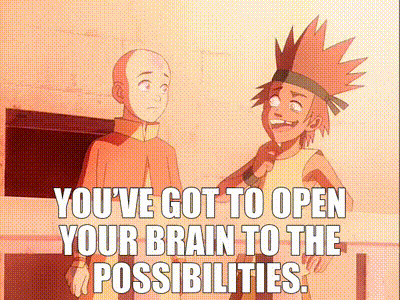
And I ask chat, where do we draw the line? Say I’m willing to agree that Korra and Asami’s final scene was pandering to a subset of the fans, that the scene before that in the gazebo was a shameless insert, that the blush in the scene before that was out of left field, that Korra only writing back to Asami was forced, that Asami being Korra’s caregiver seemed weird, that Asami and Korra’s scenes throughout Book 3 were out of character. Suddenly we’re back to the very beginnings of Book 3, where this entire journey for the characters started. Is that not far back enough development for you? People say the final scene came out of nowhere but it was built on the back of previous scenes and moments of depth that go all the way back to the very first episode of Book 3.
Why do we ask so much of a queer ship, so much that we know in 2015 on a children’s network it was incapable of giving, but accept so little to believe in a hetero relationship? Mako and Korra had an episode and a half of development before she was saying things like “Look, I really like you and I think we are meant for each other!” and no one complained about how it was built up. Korra and Asami’s relationship was delicately rebuilt from the ground up for 26 episodes just so Korra could do something as small as ask Asami on a date in the last 2 minutes of the entire show.
“I wish they would have developed it more” can be absolutely true. We deserved to get the uncensored version of what that could have looked like. But to say that as an earnest critique of the plotline is, whether you’re queer or straight, a form of internalized heteronormativity. Remember the quote we started with: “Most expressions of homosexuality in most of movies are indirect. And what’s interesting about that is of course that is what it was like to express homosexuality in life.” There is an existing (forgive the pun) code by which queer stories get told without drawing attention. Mike and Bryan were using that artistic language to tell their story.
I really applaud them for their dedication to this. They’re two white cisgender men in hetero relationships. They put that privilege to use. And they told a story that fits right in with rich queer history and paved the way for creators like ND Stevenson and Rebecca Sugar to let their queer characters out of the closet, and for themselves 12 years later in Seven Havens to show explicitly queer couples (including Korra and Asami). Rather than take bad faith approaches by insisting this plotline was the work of hacks interested in placating an audience demographic for views at the last second, understand the history behind it. Learn to see it in other forms of media. And continue to demand that these stories get told outside of the closet.
Sources not already linked:
- https://www.tumblr.com/bryankonietzko/105916338157/korrasami-is-canon-you-can-celebrate-it-embrace
- https://www.them.us/story/love-us-column-queer-yearning
- https://faculty.xavierhs.org/vargasv/TheMotionPictureProductionCodeof1930.pdf
- The Celluloid Closet: https://www.youtube.com/watch?v=YndHaKuD6MI

Leave a Reply